Silent Story: A Handwritten Font That Adds Elegance to Every Project
Finding the right font for a design project often feels like searching for a needle in a haystack. You want something that speaks with warmth and personality, yet remains polished enough for professional use. Many designers, small business owners, and hobbyists spend hours scrolling through font libraries, testing options that either look too stiff or too casual. Silent Story bridges that gap beautifully, offering a handwritten aesthetic that feels both charming and refined.
Whether you are crafting wedding stationery, designing a logo, or personalizing a greeting card, the typeface you choose sets the emotional tone. A font that mimics natural handwriting can evoke sincerity and intimacy in ways that standard serif or sans-serif options cannot. However, many handwritten fonts come with limitations—difficult-to-access special characters, inconsistent letter spacing, or a lack of versatile swashes. Silent Story addresses these concerns directly, making it a go-to resource for creatives who want expressive lettering without the technical headaches.
What Is Silent Story and Why Designers Keep Coming Back to It
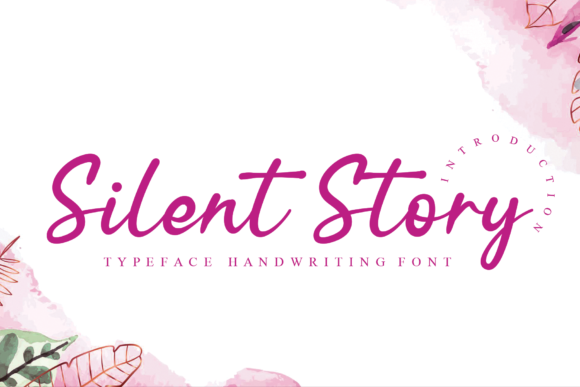
At its core, Silent Story is a handwritten script font that balances elegance with approachability. Unlike overly ornate calligraphy fonts that can feel stiff or outdated, Silent Story carries a natural flow. The letterforms appear as though they were penned by hand, with gentle curves and a consistent rhythm that makes text easy to read while still feeling personal.
The font works exceptionally well across a range of design contexts. Wedding invitations benefit from its romantic, flowing lines. Thank you cards gain an extra layer of sincerity because the text looks genuinely handwritten. Quotes set in Silent Story take on a reflective, intimate quality that resonates with readers. Logos and business cards acquire a distinctive character that helps brands stand out without sacrificing professionalism.
One of the standout qualities of Silent Story is its versatility. It does not lock you into a single mood or style. Depending on how you pair it with other design elements, it can feel whimsical, sophisticated, or heartfelt. This adaptability makes it a practical investment for anyone who regularly works on diverse creative projects.
The Practical Challenge of Accessing Special Characters and Swashes
Anyone who has worked with decorative fonts knows the frustration of discovering beautiful swashes and alternate glyphs, only to realize they are buried in a glyph panel and difficult to access. You might need to copy-paste individual characters from a font management tool, which disrupts workflow and slows down the design process. Some fonts require advanced software knowledge to unlock their full potential, leaving casual users feeling left out.
This is where the PUA encoding of Silent Story makes a meaningful difference. PUA, or Private Use Area encoding, means that all the glyphs—including swashes, alternates, and stylistic variants—are mapped to accessible character slots. You can type them directly or select them through standard character maps without needing professional design software. Whether you use Adobe Illustrator, Photoshop, Microsoft Word, Canva, or even simple text editors, those special flourishes remain within reach.
For small business owners who design their own marketing materials, this accessibility translates into saved time and reduced frustration. Instead of wrestling with technical limitations, you can focus on making your designs look exactly the way you envisioned. The swashes and alternate characters in Silent Story add that handcrafted touch that elevates a simple text into something memorable.
How Silent Story Transforms Wedding Stationery and Personal Correspondence
Wedding invitations carry an enormous amount of emotional weight. They are the first glimpse guests receive of the couple's style and the tone of the celebration. A generic, overly formal font can make an invitation feel impersonal, while something too casual might undermine the significance of the event. Silent Story occupies a sweet spot that many couples and stationery designers actively seek.
When used for names, dates, and meaningful quotes, the font imparts a sense of warmth and intentionality. The natural variation in stroke thickness mimics the pressure of a pen, giving each word a human quality that printed text usually lacks. Envelope addressing, place cards, and menus benefit from the same effect, creating a cohesive visual narrative across all paper goods.
Thank you cards also shine when set in Silent Story. After a wedding, birthday, or significant life event, expressing genuine gratitude matters. A handwritten thank you note always feels more sincere than a typed one, and this font helps replicate that authenticity even when printing in bulk. For those who struggle with legible handwriting or need to produce multiple copies, Silent Story provides a practical solution that does not compromise on heart.
Elevating Branding and Business Materials with a Handwritten Touch
Logos and business cards represent a brand's identity in a compact, instantly recognizable form. In industries where personal connection matters—such as photography, coaching, handmade goods, or wellness services—a handwritten logo can communicate approachability and individuality. Silent Story lends itself well to these applications because it feels authentic without appearing amateurish.
Consider a wedding photographer whose logo uses Silent Story. The font immediately signals a creative, personal approach, aligning with the emotional nature of the work. On a business card, the photographer's name rendered in this script creates a subtle but powerful first impression. It suggests care, attention to detail, and a human touch behind the business.
For entrepreneurs who brand themselves, such as authors, consultants, or boutique shop owners, Silent Story offers a way to stand out in a world saturated with clean, geometric sans-serif logos. The handwritten aesthetic breaks through the visual noise and invites potential clients to connect on a more personal level. Because the font includes accessible swashes, you can customize the logo with unique flourishes that competitors cannot easily replicate.
Greeting Cards, Quotes, and Social Media: Applications That Benefit Daily
Beyond formal projects, Silent Story enhances everyday creative work. Greeting cards designed for friends and family feel more special when the sentiment looks handwritten. Holiday cards, birthday wishes, and anniversary notes carry an extra layer of warmth that pre-printed generic fonts cannot match.
Quote graphics for social media also thrive with this typeface. Inspirational or reflective quotes set in Silent Story often receive stronger engagement because viewers perceive them as more personal and thoughtfully shared. The font invites readers to pause and absorb the message rather than scroll past another templated post. Combining Silent Story with a clean sans-serif for attribution creates a balanced, professional look suitable for Instagram, Pinterest, or blog featured images.
Teachers, coaches, and community leaders who create printable resources or certificates can use Silent Story to add a celebratory feel. Award certificates with names written in this script feel more personalized and meaningful than those using standard block letters. The same applies to event programs, church bulletins, and volunteer recognition materials.
Practical Considerations When Working with Silent Story
Like any script font, Silent Story performs best when paired thoughtfully with complementary typefaces. Using it for headlines, names, or short blocks of text preserves readability and visual impact. For body text, pairing it with a clean serif or sans-serif font creates hierarchy and ensures that longer passages remain easy to read.
Color choices also influence how the font reads. On wedding invitations, soft grays, blush tones, or metallic golds enhance the elegant feel. For logos and branding, darker hues provide strong contrast and maintain legibility at smaller sizes. When printing, choosing high-quality paper stock with a slight texture can further emphasize the handwritten quality of the letterforms.
Users who work primarily in Canva or other browser-based design tools will appreciate that Silent Story's PUA encoding does not require advanced software to access its full character set. Even if your design platform of choice has limited glyph support, you can often use system character maps to insert swashes and alternate characters, then paste them into your project. This flexibility opens up creative possibilities for users at all skill levels.
Different Users, Different Approaches
A professional stationery designer might use Silent Story as a foundational element across multiple client projects, mixing and matching swashes to create custom looks for each couple. The time saved by not fighting with inaccessible glyphs translates into more efficient workflows and happier clients.
A small business owner designing their own branding might focus on the approachable elegance of the font, using it to humanize their logo and marketing materials without hiring a professional calligrapher. The result is a polished, personal brand identity that was achieved independently and affordably.
A hobbyist creating cards for friends and family might appreciate Silent Story simply because it makes their projects look beautiful with minimal effort. The emotional reward of giving something that looks handcrafted strengthens personal connections, which is ultimately the point of such gestures.
Across all these scenarios, the common thread is that Silent Story removes barriers. It puts expressive, elegant lettering within reach and allows the user's intent—whether romantic, grateful, or professional—to shine through clearly.
Making the Most of Silent Story's Character Set
To fully harness what Silent Story offers, take time to explore its alternate characters and swashes before starting a project. Identify which letter variations align with your design vision. For wedding invitations, you might select swashes that extend gracefully from the first and last letters of names. For a logo, subtle alternates on key letters can create a signature style that becomes instantly recognizable.
Experiment with different pairings and layouts. Silent Story can anchor a design as the primary font or serve as an accent that highlights special words and phrases. The font adapts to your creative direction rather than forcing you into a predetermined aesthetic.
Ultimately, Silent Story earns its place in any designer's toolkit by delivering on the promise of accessible elegance. It meets the need for a handwritten font that feels genuine, versatile, and easy to use—whether you are addressing envelopes for a wedding, crafting a heartfelt thank you, or building a brand identity from scratch. The charm of Silent Story lies in its quiet ability to make every word feel like it was written just for the reader.